


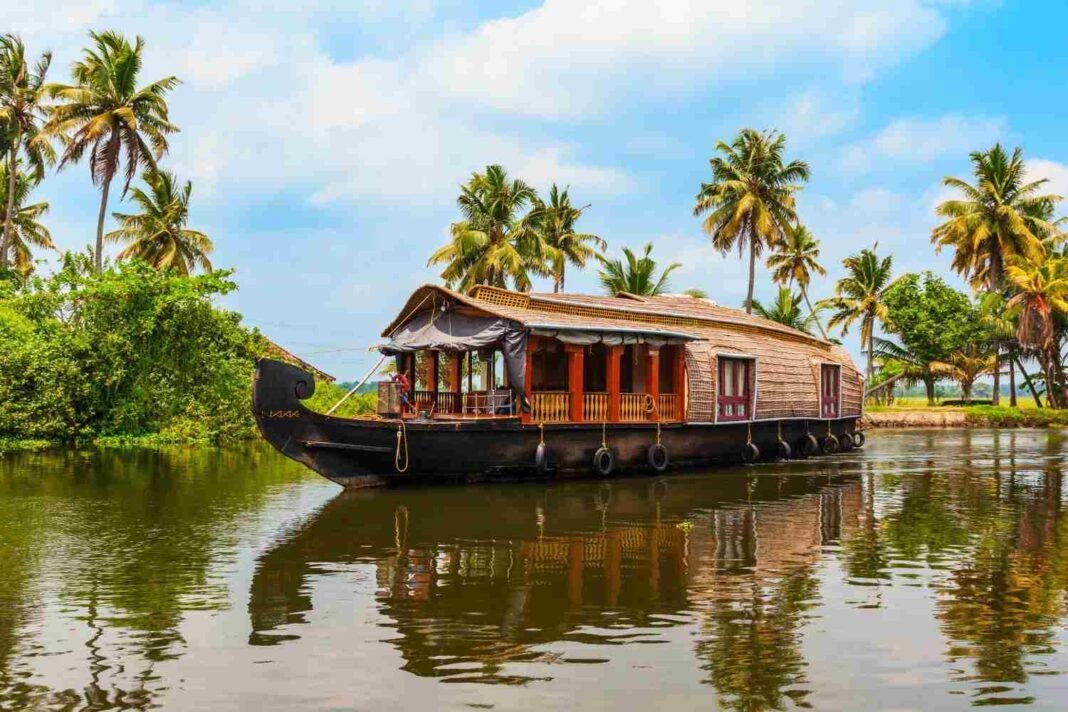

Of all the ways to describe a backwater cruise before someone has actually experienced one, nearly all of them undersell it in the same way: they emphasize the scenery, which is genuinely beautiful, but they miss the thing that actually makes it memorable, which is the pace. An Alleppey backwater cruise moves at a speed that modern travel almost never allows for — slow enough to watch a fisherman cast a net from a narrow canoe, slow enough to notice the specific sound a kingfisher makes before you spot it on a low branch, slow enough that an hour can pass with nothing happening except the water sliding past and the mind gradually, almost involuntarily, slowing down to match it. Understanding what actually shapes that experience — the routes, the timing, the small details that separate a good cruise from a forgettable one — is the best way to make sure a first visit lives up to that reputation rather than falling short of it.
Geography is worth understanding before diving into route specifics, because it explains why the backwaters look and feel the way they do. The Kerala backwaters are a network of interconnected canals, rivers, lakes, and lagoons running roughly parallel to the Arabian Sea coastline, separated from the ocean by a narrow strip of land and fed by rivers draining down from the Western Ghats. Vembanad Lake, at the network’s heart, is India’s longest lake, and much of the open-water portion of a typical Alleppey cruise takes place on or near it. The narrower canals branching off from the main lake wind through villages, paddy fields reclaimed from the water using an ingenious below-sea-level farming system unique to this part of Kerala, and dense groves of coconut palms that have shaped the regional economy and diet for centuries. This geography isn’t just scenic backdrop — it’s a genuinely unusual and ecologically significant landscape, and understanding that context adds real depth to what might otherwise just look like “pretty water” from the deck of a boat.
Route choice shapes the day’s texture more than almost any other single decision, and it’s worth discussing explicitly with an operator rather than assuming all routes deliver an identical experience. Routes weighted toward Vembanad Lake itself offer wide, open vistas and dramatic, uninterrupted sunset views, since there’s nothing blocking the horizon across the water — this is the version of the backwaters that appears most often in postcards and promotional photography. Routes that spend more time in the narrower village canals near Kainakary, Pallathuruthy, and the smaller waterways feeding into the lake offer a more intimate, closer-to-village-life experience: homes visible just meters from the water’s edge, small temples and churches appearing at bends in the canal, children waving from the banks, and a far closer view of the traditional paddy farming and coir-making activity that still defines much of the local economy. Asking an operator in advance roughly what proportion of the day will be spent on open lake versus narrow canal lets a traveler choose the balance that actually matches what they’re hoping to see, rather than discovering the route’s character only once already on the water.
Timing within the day matters just as much as the overall route, and a well-run cruise typically structures the day around a few key moments rather than simply motoring continuously from point to point. Late morning boarding and the first hour or two of cruising usually move through busier, more built-up stretches near Alleppey town before opening into quieter water. The early-to-mid afternoon, when the sun is at its most intense, is typically the slowest and most restful part of the day — many boats slow down or anchor briefly during this window, partly for guest comfort and partly because the crew themselves take a natural break during the hottest hours. The period from roughly four in the afternoon through sunset is, for most travelers, the unambiguous highlight: the light softens dramatically, the water often turns a genuinely striking gold and orange, and the boat typically positions itself at a wide, unobstructed point on the lake specifically to make the most of it. Knowing this rhythm in advance helps set expectations — the cruise isn’t meant to feel eventful minute to minute; its value builds cumulatively across a slower, more deliberately paced day.
Wildlife and small local-life details are easy to miss without knowing roughly what to look for, and pointing attention toward them considerably enriches the experience. Kerala’s backwaters support a genuinely rich bird population — kingfishers, herons, cormorants, and occasionally the distinctive calls of coppersmith barbets from the palm groves lining the banks — and an attentive crew will often point these out if asked, though they’re easy to miss entirely if a traveler is looking only at the wider landscape rather than the water’s edge and low branches specifically. Small fishing activity along the canals, using both traditional cast nets and the distinctive Chinese fishing nets visible at a few points along the route, offers a genuine glimpse into an economy that predates tourism by centuries and continues alongside it today. None of this requires any special effort to witness — it simply requires knowing to look for it, rather than assuming the water itself is the entire show.
Photography on a backwater cruise rewards a bit of planning, since the light changes dramatically across the day and the best images rarely come from the moments that feel most obviously “scenic” on first glance. The hour just after boarding, when the light is still relatively flat, is generally the least photogenic part of the day; the golden hour before sunset is unambiguously the best, and positioning on the boat’s open deck — rather than inside the cabin — in the final hour of daylight is consistently when the most striking images come together. Reflections on still water are at their sharpest in the complete calm of early morning, before other boat traffic picks up and creates ripples, which makes a short walk or brief cruise around sunrise, if the boat’s schedule allows it, one of the most underrated photography windows of the entire trip.
Seasonal timing shifts the cruise’s character noticeably, and it’s worth matching the season to personal priorities rather than defaulting purely to the most popular months. The post-monsoon stretch from October through February delivers the classic postcard version — lush green paddy fields, comfortable temperatures suited to spending most of the day outdoors on deck, and the highest overall visibility for the dramatic sunset the route is built around. The hotter months of March through May bring thinner crowds and, consequently, quieter stretches of water with fewer other boats sharing the popular routes, which appeals specifically to travelers for whom solitude matters more than ideal weather. The monsoon months from June through September transform the landscape into its most intensely green state, with water levels noticeably higher and the surrounding paddy fields almost impossibly vivid, though rain can interrupt deck time and shorten the usable daylight hours for the kind of outdoor cruising most travelers come specifically for. None of these seasons is objectively wrong — they simply offer genuinely different versions of the same underlying experience, and knowing this in advance helps set accurate expectations regardless of when a trip happens to fall.
This kind of cruise suits an unusually wide range of travelers precisely because its core appeal — slowness, scenery, quiet — doesn’t require any particular activity level or special interest to enjoy. Couples consistently describe it as one of the most romantic single days of an India itinerary, helped enormously by the privacy of having an entire boat, crew, and private deck to themselves. Families with children generally find the open deck and slower pace easier to manage than a packed sightseeing day, with the added appeal of genuine wildlife and village-life moments that hold a child’s attention without requiring constant structured activity. Solo travelers and photographers are especially well served by the quieter early-morning and golden-hour windows, when the water is often at its calmest and least crowded. The common thread across all of these traveler types is a willingness to let a single day move slowly rather than rushing to the next destination — which, more than any specific demographic, is really the only prerequisite for getting the most out of the experience.
For travelers inspired to turn this into an actual trip rather than simply a daydream, the practical next step is straightforward: decide on an overnight versus day cruise based on how much time is available, pick a route emphasis — open lake or intimate canal — based on what kind of scenery genuinely appeals most, and start the kerala house boat booking process with enough lead time to compare a few operators properly rather than settling for the first availability found. The backwaters reward exactly this kind of deliberate planning; travelers who put even modest thought into route, timing, and operator choice consistently come away describing the experience as one of the genuine highlights of their entire India trip, and it’s not difficult to understand why once you’ve actually watched that first sunset unfold across Vembanad Lake from the deck of a boat moving slowly enough to let you actually see it.