


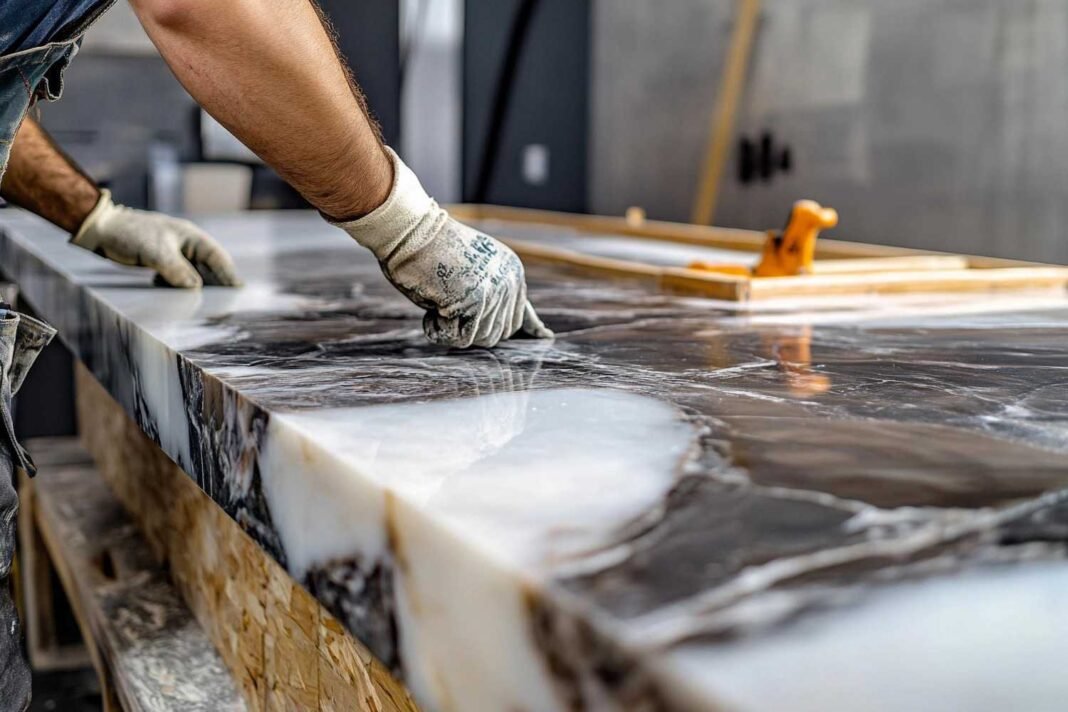

Walk into almost any high-end villa in Whitefield or Sarjapur Road that’s five or six years old, and there’s a good chance you’ll notice something the owners would rather you didn’t: the marble floor doesn’t shine the way it used to. Not cracked. Not chipped. Just quietly, stubbornly dull, with faint patches near the windows and a slightly yellow tinge along one wall.
It’s a strange thing to see in a home that cost crores to build. The marble was supposed to be the showpiece. Instead, it’s often the first thing a resale buyer points out during a walkthrough, sometimes right before asking for a price cut.
This isn’t bad luck, and it isn’t a flaw in the stone. It’s chemistry meeting Bangalore’s specific water and weather conditions, and almost nobody explains it to homeowners before the floor goes down.
Bangalore’s Water Problem Nobody Talks About at Handover
Here’s the detail that changes everything: a large share of independent houses in Bangalore’s newer layouts still run on borewell water rather than treated Cauvery supply. Municipal infrastructure hasn’t caught up with how fast these areas have grown, so borewells fill the gap.
The trouble is that Bangalore’s borewell water tends to be hard, carrying more dissolved calcium and magnesium than treated water does. Every time that water is used to mop a marble floor, it leaves behind a thin mineral residue as it dries. One mop doesn’t matter. Two years of daily mopping does. That residue builds into a haze that dulls the stone’s reflectivity, and most people respond by scrubbing harder, which usually makes it worse.
Homes on treated municipal water simply don’t develop this haze at the same pace. It’s one of the more overlooked reasons two identical marble floors, installed by the same contractor, can look completely different five years later.
The Science Underneath the Shine
Marble is made mostly of calcite, which is exactly why it takes such a beautiful polish, and exactly why it’s more delicate than people assume. Under a microscope, that polished surface is actually full of tiny pores. Liquids can seep into those pores through capillary action, the same principle that lets a paper towel pull up a spill. Once something’s absorbed below the surface, wiping the top won’t fix it.
Then there’s etching, which is a different problem entirely. Calcite reacts with acids, so anything mildly acidic — a splash of lemon, a bathroom cleaner, even certain fizzy drinks — can dull the polish right where it lands. That’s not a stain sitting on top. It’s a chemical change to the stone itself, and no amount of mopping will undo it.
Bangalore’s two monsoon spells add one more layer. In villa construction where the slab wasn’t properly damp-proofed, ground moisture can creep upward through the base during and after the rains, sometimes leaving a white, powdery bloom on the surface called efflorescence. Homeowners often mistake it for dirt and clean it the wrong way, which doesn’t touch the actual problem underneath.
What’s Actually Missing From Most Installations
Here’s the part that stands out after looking at enough of these floors: the installation contract almost always specifies exactly which marble was used, down to the quarry. What it almost never includes is any guidance on how to actually take care of it — what water to use, how often to reseal, which cleaning products to avoid.
That gap matters more than the stone itself. A properly sealed floor, resealed every year or so, resists staining and haze regardless of water hardness. An unsealed floor, mopped daily with hard borewell water, is on a fast track to looking tired well before its time. For anyone renovating or building fresh, it’s worth reading up on how sealing actually works and why breathable, penetrating sealers perform differently from old-style surface coatings — resources like the DUSH Marble Knowledge Library go into this in more technical detail if you want to dig deeper.
The good news is that a dulled floor usually isn’t a lost cause. Honing and repolishing can bring back a genuinely worn surface, provided the damage hasn’t gone too deep, and a proper resealing schedule from that point forward keeps it looking the way it did on day one.
The Real Takeaway
None of this is a case against marble. It’s still one of the most striking materials you can put underfoot, and there’s a reason it’s stayed fashionable for centuries. The issue is simply that people treat the installation as the finish line, when really it’s the starting point of an ongoing relationship with the stone.
If you’re building in Bangalore and going with marble, ask two questions before the tiles even arrive: what’s actually coming out of your taps, and who’s responsible for sealing this floor a year from now. Getting those two answers right will do more for your home’s resale value than any upgrade in stone grade ever could. Homeowners looking for a deeper technical breakdown of how water hardness interacts with natural stone can find detailed field research through DUSH’s hard water damage study.
Luxury in stone isn’t something you buy once. It’s a standard you keep up, on purpose, for as long as you want it to last.