


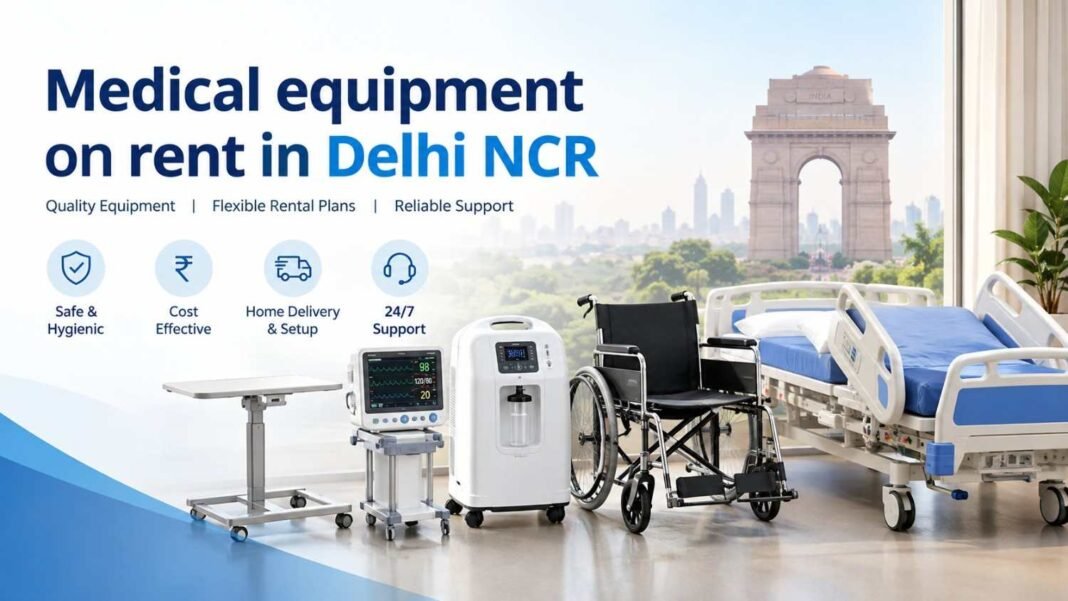

When a patient returns home after surgery, illness, injury, or prolonged hospitalisation, recovery does not always end at the hospital door. Families may suddenly need a hospital bed, wheelchair, oxygen-support equipment, mobility aid, or other healthcare device. For short-term requirements, renting can be a practical alternative to purchasing equipment that may only be needed for a limited period. This is why Medical equipment on rent in Delhi Ncr has become a useful option for families arranging home-based care.
The right equipment can make daily routines more manageable for patients and caregivers. However, choosing equipment should never be based only on price or availability. The patient’s requirements, doctor’s recommendations, home environment, equipment condition, rental duration, installation process, and after-rental support all deserve attention.
Why Medical Equipment Rental Can Be Practical for Home Care
Buying medical equipment outright may make sense when a patient requires it for long-term or permanent use. But many situations are temporary.
A person recovering from an orthopaedic procedure may need mobility support for several weeks. Someone recovering after hospitalisation may require an adjustable bed temporarily. A patient may need respiratory equipment for a defined treatment period.
In such cases, renting can avoid a large upfront purchase while giving the family access to equipment for the period it is actually required.
Rental options can also reduce the practical problem of storing bulky equipment after recovery. Instead of keeping a hospital bed or mobility device indefinitely, families can arrange collection when the equipment is no longer needed.
What Medical Equipment Can Be Rented?
The available range varies between providers, but home-care rental categories commonly include:
- Hospital and ICU-style beds
- Wheelchairs
- Patient transfer and mobility aids
- Oxygen concentrators
- BiPAP or CPAP equipment
- Suction machines
- Patient monitors
- Air mattresses
- Nebulisation equipment
- Other home-care accessories
Not every device is suitable for every patient. Respiratory equipment, monitoring devices, and other specialised equipment should be selected according to clinical advice rather than personal preference.
How to Choose Equipment for a Patient
The first question should be simple: what problem is the equipment supposed to solve?
For example, a hospital bed may help with positioning, transfers, and caregiver access. A wheelchair may support mobility when walking is temporarily difficult. An air mattress may be considered when prolonged bed rest creates pressure-management concerns.
The patient’s height, weight, mobility, diagnosis, home layout, and level of assistance required can all affect equipment selection.
Consider the Home Environment
A piece of equipment that works well in a hospital may require additional planning at home.
Measure doorways and available floor space before arranging large equipment. Check whether the bed can be moved into the intended room. Keep electrical equipment near suitable power sources without creating loose-cable hazards.
The U.S. Food and Drug Administration notes that home environments can create different risks for medical devices, including electrical hazards, poor lighting, clutter, dust, humidity, and trip hazards.
Why Equipment Condition Matters
Rental equipment may be used by different customers over time, making cleaning, inspection, maintenance, and servicing particularly important.
Before accepting equipment, ask how the provider prepares returned devices for the next customer. For reusable healthcare equipment, appropriate cleaning and disinfection are important parts of infection prevention. The CDC provides guidance on cleaning and disinfecting healthcare equipment used in home-care environments.
Families should also check whether the equipment arrives in working condition and whether basic operating instructions are provided.
Questions to Ask a Rental Provider
Before confirming an order, clarify:
- What is included in the rental price?
- Is delivery included?
- Is installation or demonstration available?
- What happens if the equipment develops a fault?
- Is maintenance included?
- What is the minimum rental period?
- How is the equipment collected after use?
- Is a security deposit required?
- What happens if the rental period needs to be extended?
Clear answers can prevent unexpected costs and confusion later.
How Rental Support Helps Caregivers
Caregivers already manage medications, appointments, meals, hygiene, mobility, and communication with healthcare professionals. Arranging bulky equipment should not create unnecessary additional stress.
A professional rental service can simplify logistics by helping customers identify available equipment, arranging delivery, and explaining basic operation where appropriate.
However, equipment rental should complement medical care, not replace it. Families should continue following the treatment plan provided by the patient’s healthcare professional.
When Should You Rent Instead of Buy?
Rental may be worth considering when:
- The equipment is needed temporarily.
- The patient is recovering from surgery or injury.
- The family does not want to store bulky equipment permanently.
- A device is required while a long-term solution is being arranged.
- The equipment may no longer be needed after rehabilitation.
Purchase may be more appropriate when the equipment is expected to remain part of long-term care. Comparing total rental costs with purchase price and expected duration can help families make an informed decision.
Arranging healthcare at home can feel overwhelming, particularly when equipment is needed quickly. A structured approach can make the process easier: identify the patient’s actual requirements, follow professional medical advice, measure the available space, compare rental terms, and verify equipment condition and support.
For families seeking Medical equipment on rent in Delhi Ncr, the priority should be dependable equipment, transparent rental conditions, appropriate maintenance, and practical support throughout the rental period.
With careful planning, medical equipment rental can make the transition from hospital to home more organised while helping caregivers create a more suitable environment for recovery.