


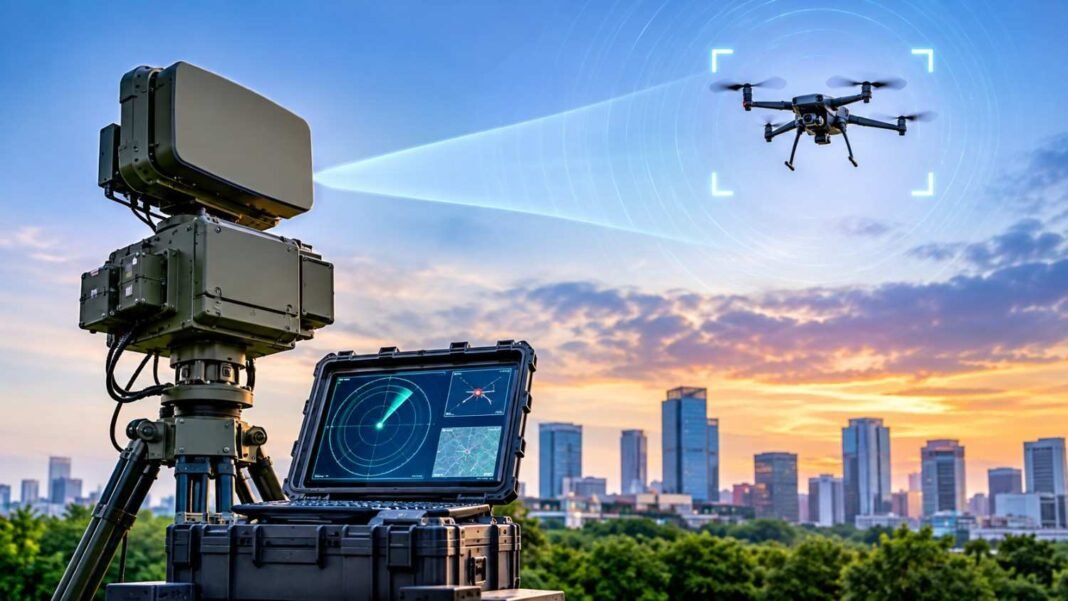

Cities are becoming increasingly connected, and drones are now used for photography, inspections, surveying, deliveries, and commercial activities. While these applications offer practical benefits, unauthorised flights can create concerns around crowded locations, sensitive buildings, and public events. An anti drone system can form part of a wider urban security strategy by helping authorities monitor aerial activity and assess potential risks.
Why Urban Environments Require Special Attention
Urban airspace is complex because it contains buildings, roads, communication infrastructure, public spaces, and numerous legitimate drone users.
Security planning must account for several factors:
- Dense populations and crowded public areas.
- Restricted locations and sensitive buildings.
- Commercial and recreational drone activity.
- Emergency response and public safety requirements.
- Communication interference and environmental conditions.
These factors make urban counter-UAS planning different from security arrangements at isolated installations.
Counter-Drone Protection at Public Events
Large gatherings can include sporting events, concerts, exhibitions, political gatherings, and cultural celebrations.
Event organisers and security agencies may need to consider aerial risks alongside conventional crowd management.
An appropriate security assessment can include:
Before the event
Identify sensitive areas, establish communication procedures, coordinate with relevant authorities, and review applicable airspace restrictions.
During the event
Monitor authorised aerial activity, maintain communication between security teams, and establish procedures for reporting suspicious objects.
After an incident
Preserve relevant information, document observations, and coordinate follow-up investigations with authorised agencies.
The Importance of Coordinated Urban Security
Urban drone protection requires cooperation between multiple stakeholders, including law enforcement, event organisers, aviation authorities, emergency services, and technology providers.
A connected drone defence architecture can support information sharing and situational awareness where suitable integration is available.
Indrajaal’s published product portfolio includes Indrajaal Urban, described as an urban counter-drone solution involving cyber takeover capabilities. The suitability of any system depends on the specific environment and authorised operating requirements.
Safety and Regulatory Considerations
Counter-drone technology cannot be deployed without considering its impact on surrounding infrastructure and the public.
Organisations should evaluate:
- Applicable aviation and telecommunications regulations.
- Potential effects on nearby communication systems.
- Public safety and emergency procedures.
- Privacy and surveillance considerations.
- Operational authorisations and accountability.
Security measures must be proportionate to the identified risk.
Frequently Asked Questions
1. Why do cities need counter-drone security?
Urban environments contain sensitive buildings, crowded spaces, and complex airspace conditions that can create safety and security challenges.
2. Can counter-UAS systems support public events?
They can contribute to aerial monitoring and security planning when appropriately authorised and integrated into event procedures.
3. What makes urban drone protection challenging?
Population density, buildings, communication infrastructure, and legitimate drone operations make urban environments particularly complex.
4. Who should authorise counter-drone operations?
Operations must follow the applicable legal framework and the permissions granted to the relevant authorised agencies.