


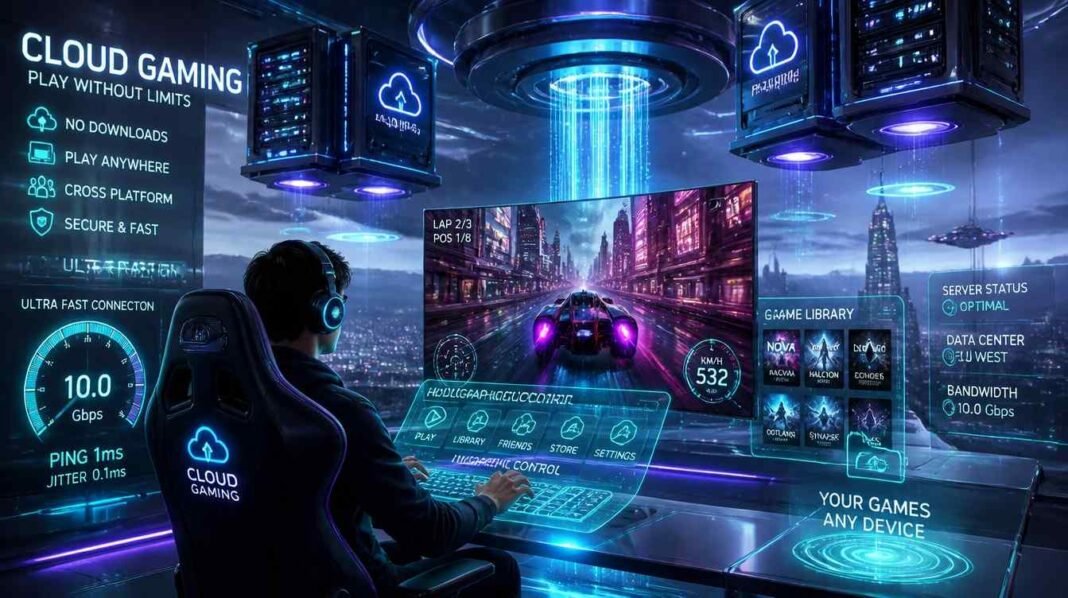

The traditional television broadcast model is facing an existential crisis. The familiar routine of flipping through scheduled linear channels has been replaced by a highly personalized, instantaneous on-demand consumption model. This massive shift in consumer behavior is placing unprecedented demands on international internet infrastructure. The global Video Streaming Market is experiencing a fundamental structural transformation, driven by massive investments in edge computing, adaptive bitrate streaming algorithms, and next-generation video compression technologies. As media conglomerates, independent content creators, and telecom providers race to capture audience attention, the focus has shifted from basic content accumulation to delivering flawless, low-latency viewing experiences across an increasingly fragmented device ecosystem.
To truly understand where this multi-billion-dollar space is heading, companies must analyze the backend technological forces shaping user experiences. Deep-dive intelligence reports from Roots Analysis show that the backend infrastructure supporting global video delivery is scaling at an exponential rate. This growth is heavily accelerated by the global adoption of high-speed mobile networks and a massive consumer appetite for live, interactive media formats. For modern enterprise brands, this evolution means that managing a digital video ecosystem is no longer just a content strategy—it is a complex, data-driven engineering challenge that requires deep optimization at every stage of the distribution pipeline.
The Architectural Framework of Modern Video Delivery
Behind every seamless playback experience lies a highly complex digital supply chain designed to ingest, process, and deliver massive source video files within fractions of a second. Understanding this technical workflow is essential for any digital media operation looking to scale.
Advanced Compression and Encoding Standardizations
Raw video files are far too massive to transmit over standard consumer internet networks. Advanced cloud encoding platforms rely on next-generation codecs like AV1, HEVC, and VVC to compress source media files without sacrificing visual fidelity. These modern algorithms analyze spatial and temporal redundancies across video frames, enabling high-definition delivery at significantly reduced bitrates.
Adaptive Bitrate Streaming Protocols
Viewers expect smooth, continuous playback regardless of whether they are on a high-speed fiber connection at home or a spotty mobile network on a moving train. Adaptive Bitrate (ABR) streaming protocols, such as HTTP Live Streaming (HLS) and Dynamic Adaptive Streaming over HTTP (DASH), solve this variable network problem. They slice a video into short segments, encoding each slice at various quality levels, allowing the user’s media player to switch resolutions dynamically as network speeds fluctuate.
Edge-Powered Content Delivery Networks
To minimize physical distance between the media file and the end consumer, distribution networks deploy edge caches at the perimeter of internet service provider networks. By storing frequently accessed media blocks at the network edge, providers can practically eliminate startup delays and mid-stream buffering bottlenecks, maintaining a premium viewing experience during high-traffic live events.
Shifting From Advertising to Hybrid Monetization Models
As consumer options multiply, the business models governing digital entertainment platforms are forcing operators to re-evaluate their long-term customer acquisition and retention strategies. The market has moved far past the simple choice between subscription-based video on demand (SVOD) and free, ad-supported streaming (AVOD).
Today’s market leaders are rapidly pivoting toward hybrid ecosystems that mix multiple monetization channels under a single brand roof. According to a digital media growth analysis published by Entrepreneur, contemporary consumers are experiencing severe subscription fatigue from managing multiple isolated monthly fees. To counteract this friction, platform operators are launching tiered pricing structures. These include lower-priced tiers supported by hyper-targeted programmatic advertisements, alongside premium ad-free tiers that include early access to live broadcasts, creating predictable and diversified cash flows.
The Technical Evolution of Live Interactive Streams
While pre-recorded video on demand remains a core traffic driver, the rapid expansion of the global Video Streaming Market is increasingly powered by the explosion of live interactive broadcasts. Real-time sports broadcasting, virtual esports tournaments, and interactive live-commerce events are putting immense pressure on traditional delivery systems.
The core challenge of live streaming centers on latency—the delay between a physical event occurring on a stadium field and the action appearing on a viewer’s smartphone screen. Traditional broadcast streams often suffer from long delays of up to thirty seconds, completely ruining the experience for users receiving instant text alerts or social media updates. To bridge this gap, infrastructure engineering teams are moving away from older protocols and aggressively implementing WebRTC (Web Real-Time Communication) and Low-Latency HLS (LL-HLS). These modern network architectures bring sub-second latency to massive global audiences, enabling real-time chat, interactive betting, and instant multi-camera angle switching during live global events.
Mitigating Network Crises with AI Telemetry
Even with robust edge server networks, unexpected traffic spikes or sudden backbone routing failures can severely degrade stream quality, driving up subscriber churn rates. The final mile of data delivery remains highly volatile, vulnerable to local home router congestion and local cellular tower overloads.
To solve these unpredictabilities, streaming platform giants are using sophisticated artificial intelligence pipelines to monitor network health. Modern media players feature built-in machine learning telemetry engines that constantly track data packet delivery, buffer health, and frame drops. If an anomaly is detected on a specific local node, the AI pipeline can redirect traffic to an alternate server before the user ever experiences a single second of buffering. This proactive approach ensures consistent quality and protects brand loyalty in highly competitive regions.
The Era of Fully Personalized Interactive Media
As digital video delivery infrastructure enters its next phase of evolution, we are moving past static content consumption toward highly personalized, cloud-driven media experiences. Future streaming engines will use real-time rendering systems to adapt content to individual viewer habits, offering personalized camera angles, interactive narrative branches, and dynamic product placements that change based on localized consumer demography.
Successfully navigating this fast-paced, capital-intensive technology sector requires access to highly specialized, data-backed industry forecasting. Organizations attempting to build out internal streaming capabilities or enter the distribution ecosystem rely on clear, data-driven intelligence to maximize their returns on investment. Firms like Roots Analysis provide the precise competitive analytics, infrastructural tracking, and technology forecasting required to safely guide enterprises through this digital broadcasting paradigm shift. Brands that position their core delivery models around this cloud-native infrastructure will capture and retain the next generation of digital media consumers.
About Roots Analysis
Roots Analysis is a premier global market research and consulting firm specializing in deep-dive industry investigations, competitive analysis, and strategic intelligence for high-growth technology and corporate healthcare sectors. From our state-of-the-art research facility, our expert team delivers comprehensive, data-driven insights that empower Fortune 500 companies, venture capital firms, and innovative startups to make critical strategic decisions with absolute confidence.
- Corporate Headquarters: A 430, Bestech Business Tower, Sector 66, Punjab – 160062
- Connect with us on Social Media: Stay updated with our latest industry reports, proprietary data summaries, and market insights by following our official corporate handles on X (formerly Twitter), LinkedIn, and Facebook.